

It is nine in the evening. Your child has been at the study table for two hours. The Science book is open at a chapter covered last month, the Maths notebook is underneath it, and when you ask what is being revised, the answer is a vague “everything”. A week later the scene repeats, and one question stays with you: how much should my child actually be studying at this stage?
It is a fair question, and the usual answer is the wrong one. Most families treat Class 10 board exam preparation as a problem of quantity. In practice, the students who go into the boards calmly are rarely the ones sitting longest. They know what they are studying on a given day, understand a chapter before memorising it, find weak areas early, and revise in cycles rather than all at once in February.
Start with a realistic study plan, not longer study hours
The right amount of study time depends on your child’s position in the syllabus, school timings, homework load and concentration, so no single figure suits every student. Structure matters more than duration.
Break the syllabus into chapters rather than subjects, because “finish Science” is not a task anyone can begin. Set a weekly goal and a smaller daily one, and keep separate slots for learning, practice and revision, since a plan covering only the first leaves everything else to the end of the year. Review it each weekend and adjust.
Time management and goal setting are among the academic skills Blossom Academy lists for its students.
Make sure your child understands concepts before memorising answers
Memorised answers collapse the moment a question is reworded, so understanding has to come first.
Encourage a first reading for meaning, then ask your child to explain the topic aloud in ordinary language. If the explanation stalls halfway, the gap is visible at once. The useful questions are “why does this happen” and “how do we get from this step to the next”.
Blossom Academy’s published teaching philosophy describes conceptual understanding, critical thinking and practical application, and this is the home version of that idea.
Use regular tests to find weak areas early
A test is most useful as a diagnostic tool, not as a number to be reported at dinner.
The mark itself is the least interesting part. Go through the paper with your child and sort the lost marks by cause: topics never understood, facts forgotten, careless errors, questions left incomplete, and answers that were correct but poorly presented. Each of those needs a different fix.
Blossom Academy’s academic support system includes weekly assessments and monthly tests, so feedback arrives long before the boards. The habit needed at home is reading those papers properly.
Keep a mistake and doubt notebook, and clear doubts early
One practical step is a single thin notebook for mistakes and unresolved doubts. This is general study advice, not a school programme, and it turns scattered problems into a finite list. Into it go questions answered incorrectly, formulae that keep slipping, and doubts needing a teacher’s clarification. Closer to the examinations it becomes the most valuable revision document your child owns.
Doubts should not be allowed to pile up. One carried from July to January becomes a chapter your child quietly avoids. Ask the teacher, reread the explanation, work through a solved example, then attempt a similar question to confirm the doubt has closed. Blossom Academy lists doubt clearing and extra classes for weak areas within its academic support.
Build revision into the week
Revision should run alongside the syllabus rather than wait for it to finish.
A workable cycle is this: learn the chapter, practise questions, test yourself, note the mistakes, revise, then test again after a gap. Weekly, that means a short review of new material within a day or two, a longer revision at the weekend, and a full chapter revision after that.
Later in the year, add mixed practice drawing on several chapters, because board papers do not arrive chapter by chapter.
Help your child practise writing answers under time limits
Knowing an answer and writing it well within a fixed time are separate skills, and only the second is tested in the examination hall.
Set aside time each week for written practice. Ask your child to read the question carefully and note what it demands. Encourage clear structure, diagrams where useful and legible presentation. Time inside the paper needs practice too: judging how long each section deserves, moving on from a question that is not working, and keeping a few minutes to check the answers.
Closer to the boards, complete papers written in one sitting are worth more than loose questions. For current examination rules and dates, refer to the official CBSE website.
What parents can do at home without adding pressure
Your role during board preparation is largely environmental, and more influential than it looks.
Ask what your child is working on, and listen without interrogating. Help build a routine that fits the school timetable. Agree phone rules together instead of imposing them. Protect sleep, because a tired student revising at midnight retains very little. Provide a quiet, well lit place to work, and allow short breaks.
Notice effort and progress rather than only marks, so a difficult week does not feel like a verdict, and avoid comparisons with siblings, classmates or last year’s toppers, which rarely motivate and usually make a struggling child less willing to speak up.
How Blossom Academy’s academic approach supports Class 10 preparation
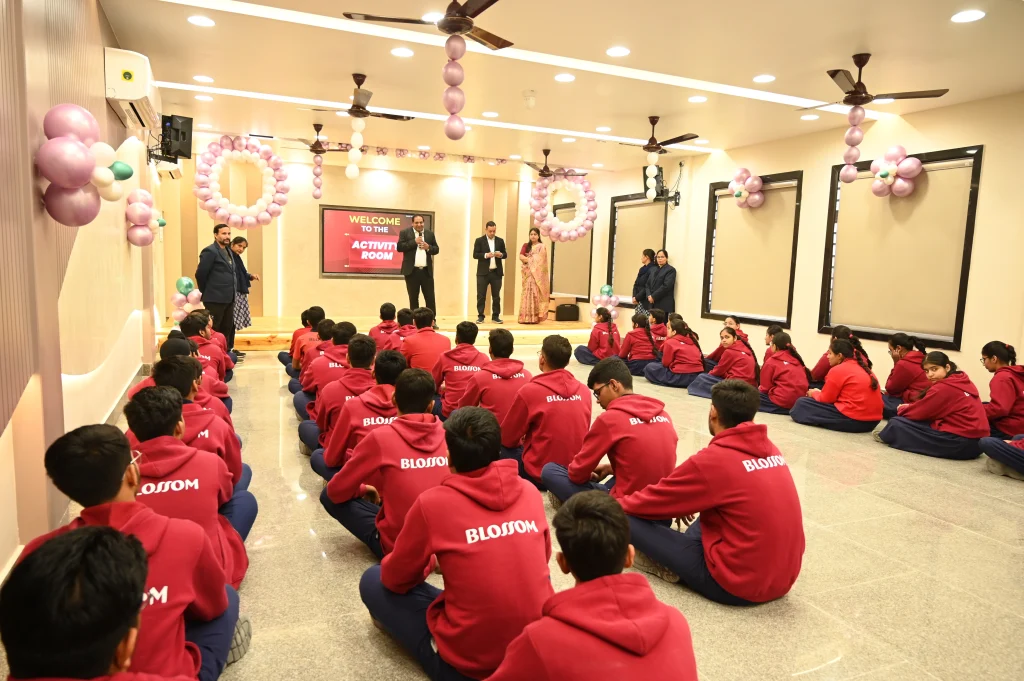
Much of the above depends on the school side too. Blossom Academy’s academic approach describes Classes 9 and 10 as the Excellence stage of its learning path, focused on board examination preparation.
The published academic support system covers regular testing, doubt clearing with extra classes for weak areas, exam guidance and parent reporting. It also describes smart classroom learning, activity based teaching and personalised attention in small classes.
For parents, the most useful part is the communication structure. Parent teacher meetings, quarterly progress reports and parent workshops are where a specific problem, such as one weak chapter in Mathematics, can be raised and acted upon. There is more on the about us page and in student life, and the school can be reached through the contact page.
A simple Class 10 board preparation checklist
Treat this as a working reference, not a fixed timetable.
Before starting a chapter
- Check what the chapter covers
- Read once for understanding before making notes
- Mark the parts that look difficult
During preparation
- Make brief notes where they genuinely help
- Practise textbook and additional questions
- Write down doubts as they appear
Every week
- Revise the chapters completed so far
- Attempt a test or a set of mixed questions
- Sort errors by cause, not only by subject
- Adjust the next week’s plan realistically
Before the board examinations
- Complete a full syllabus revision
- Write complete papers under timed conditions
- Return to the mistake and doubt notebook
- Avoid leaving revision to the final few days
Frequently asked questions
How early should a student start preparing for Class 10 board exams?
Preparation should begin with the academic year itself rather than with a separate revision phase later. Students who keep pace with chapters as they are taught, practise regularly and revise weekly reach the final months needing consolidation instead of fresh learning.
How many hours should a Class 10 student study every day?
There is no single correct figure. It depends on the school timetable, homework, remaining syllabus and how long your child can concentrate productively. Consistent focused study on most days achieves more than occasional long sessions, and quality of attention matters more than the total on the clock.
How can parents help a child who is struggling with a subject?
Identify the specific problem first, whether it is one chapter, a type of question or the basics from an earlier class. Raise it with the subject teacher instead of simply adding study hours at home. Blossom Academy offers doubt clearing and extra classes for weak areas.
Is daily revision necessary for Class 10 board preparation?
Some revision on most days works better than a long session once a month. A short review of new material within a day or two, plus a weekly revision of that week’s chapters, keeps earlier topics accessible instead of letting them fade.
How can students use school tests to prepare for board exams?
Treat every test as feedback. Separate the lost marks into concepts not understood, facts forgotten, careless errors, incomplete answers and presentation issues, because each needs a different response. Weekly assessments and monthly tests give repeated chances to fix these patterns before the boards.
What should a student do if they have doubts in a chapter?
Write the doubt down straight away, then resolve it by asking the teacher, rereading the textbook explanation or working through a solved example. Confirm it has cleared by attempting a similar question independently. Unresolved doubts tend to become chapters the student avoids once revision begins.
How does Blossom Academy support Class 10 board preparation?
The school describes Classes 9 and 10 as its Excellence stage, focused on board exam preparation. Its published academic support system includes weekly assessments and monthly tests, doubt clearing with extra classes for weak areas, exam guidance, regular parent teacher meetings and quarterly progress reports.